The form that follows up for you
Upgrade your ask.
End the chase.
Anyone can send an email or put a form on the internet. SendGather sends each person their own link, tells you who still owes you something, and keeps chasing until they're in.
Free when you sign up — one credit asks one person, so that is 100 people. No card, no subscription, nothing to cancel.
October newsletter
12 people asked
9 in · 3 remaining
- Priya RamanSent it in
- Dana WhitfieldSent it in
- Tom BoyleStarted
- Marcus LeeOverdue
Everyone gets their own link. Nobody makes an account.
Three steps.
Ask by name
Build a short form — a paragraph, an answer, a photo, a file, a date. Attach anything they need to do it: a brief, a blank form, last quarter's copy. Pick people from your address book, one at a time or a whole group. Send once or repeat on a schedule.
They answer, with no account
Each person gets their own private link. No password, no app, nothing to install — and they can come back and change what they sent until the request is closed.
Closed when complete
See who is in and who is not, automatically remind the stragglers, and take the lot away when you are done — answers and files, filed by person, as one ZIP or straight into your own Google Drive folder.
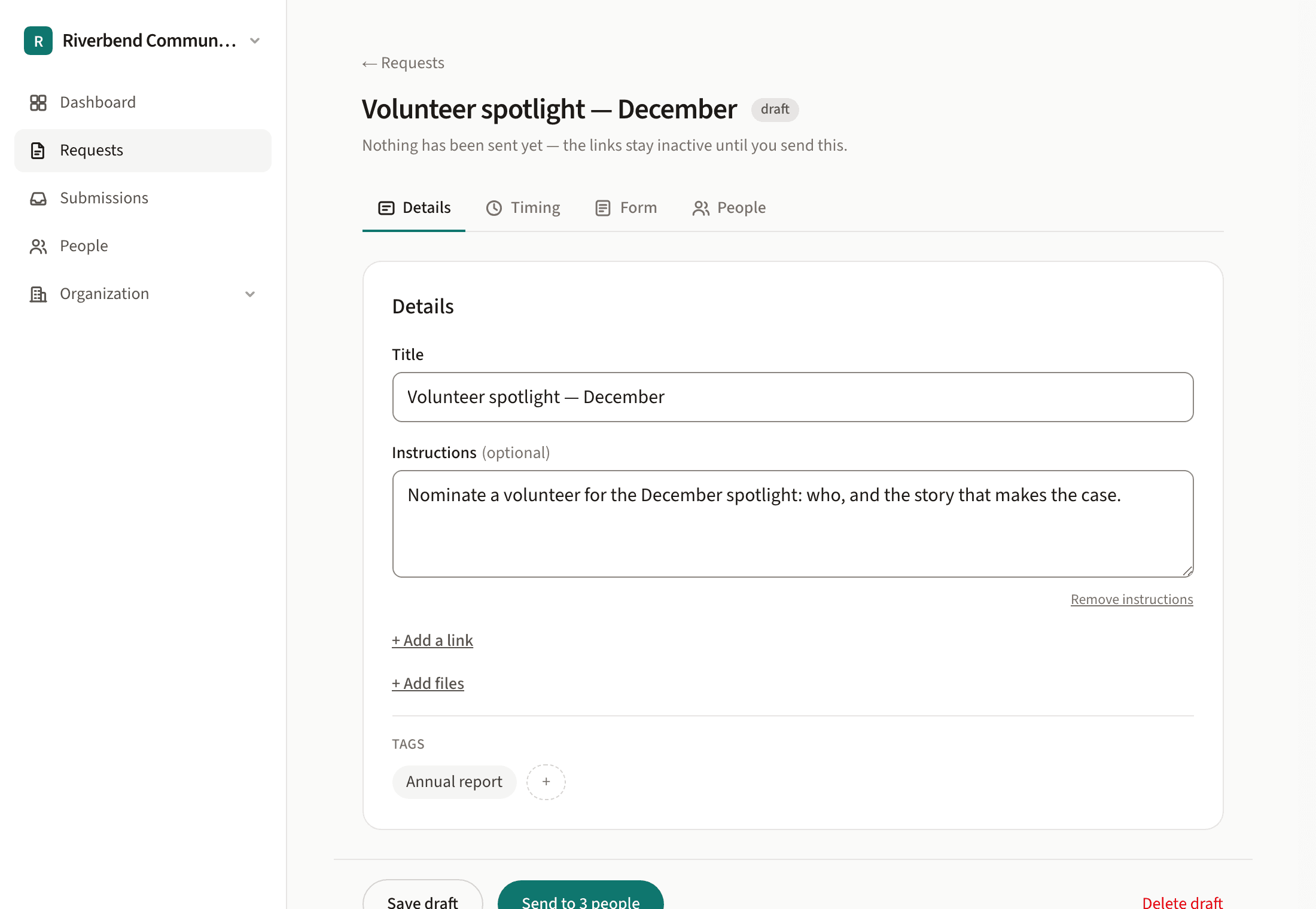
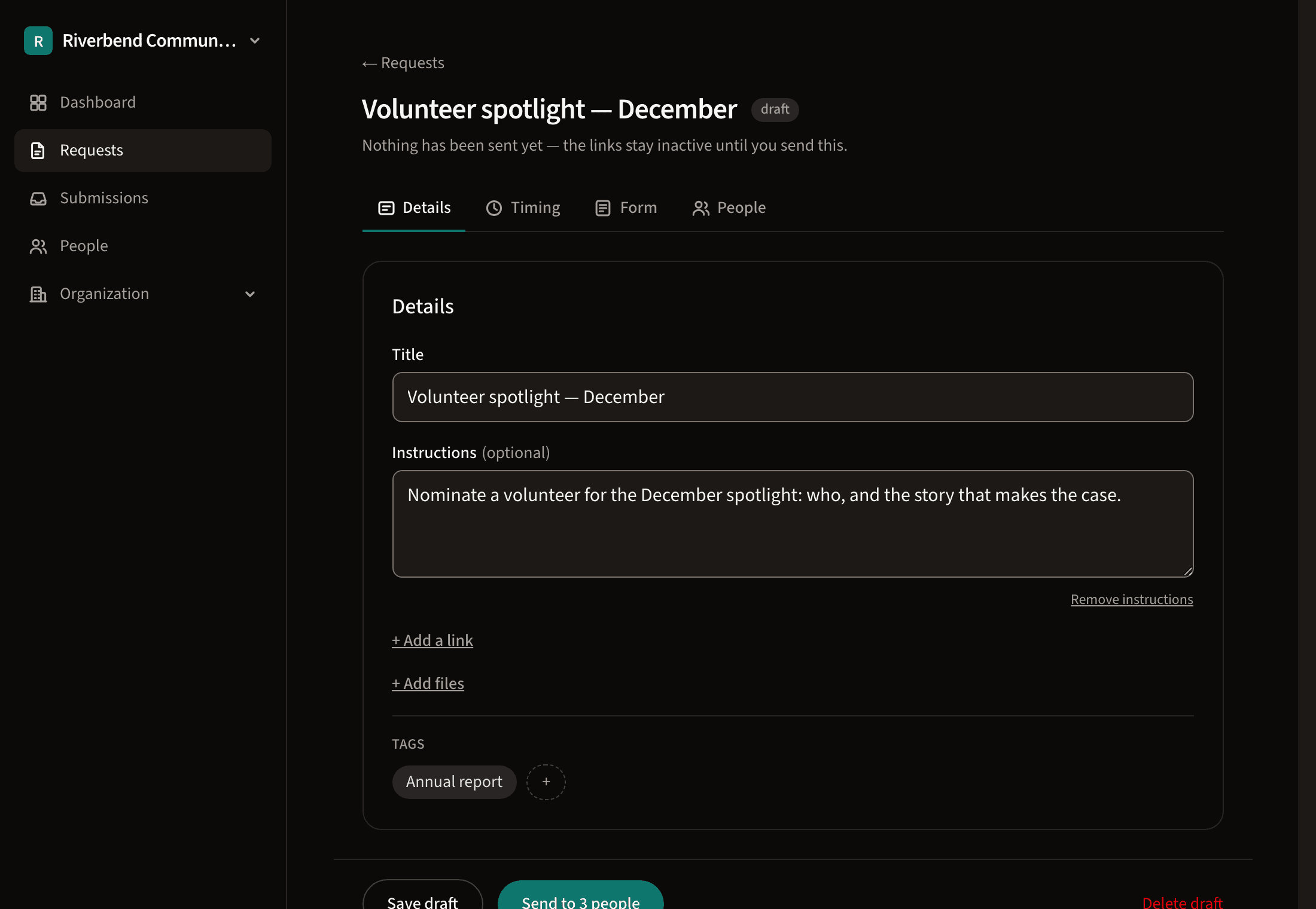
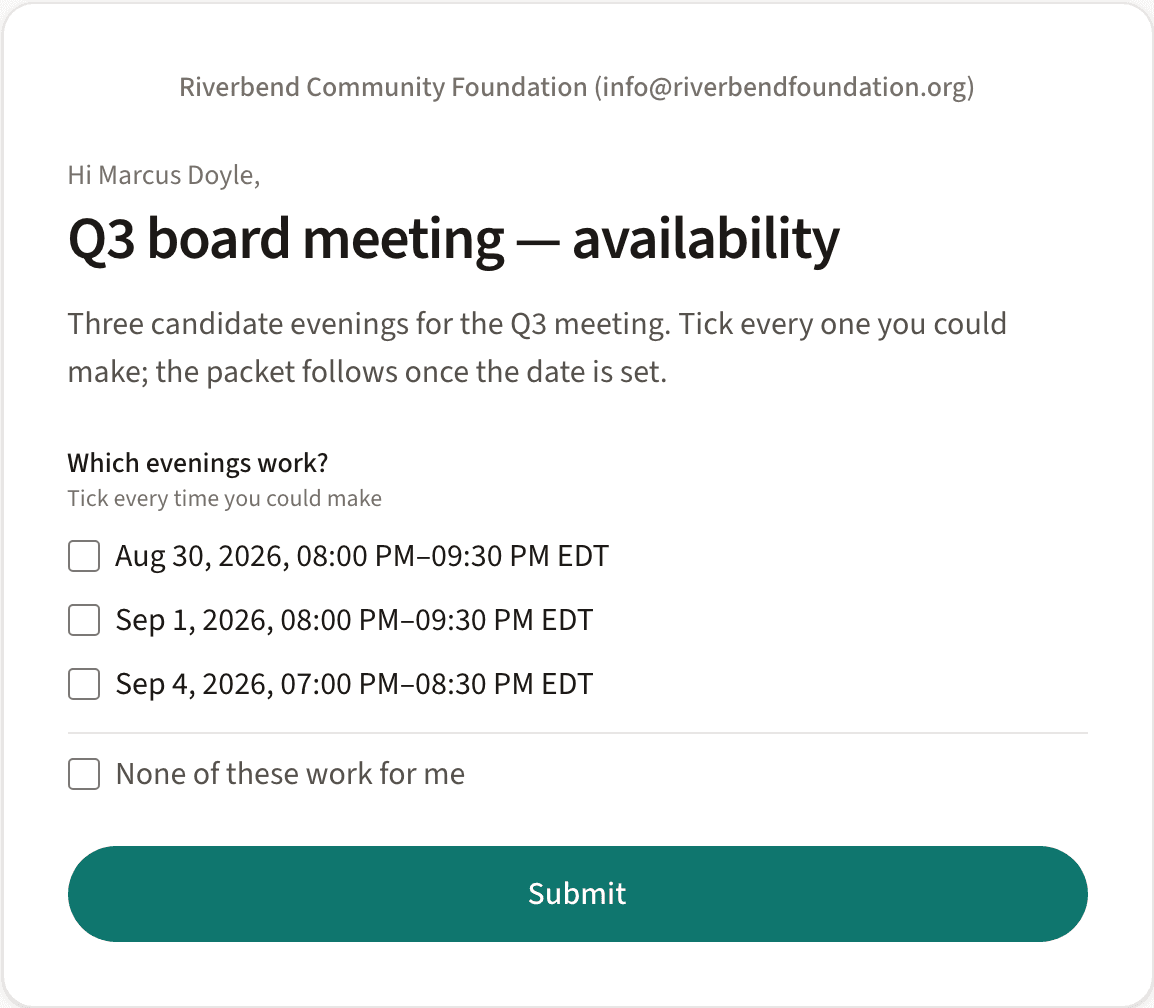
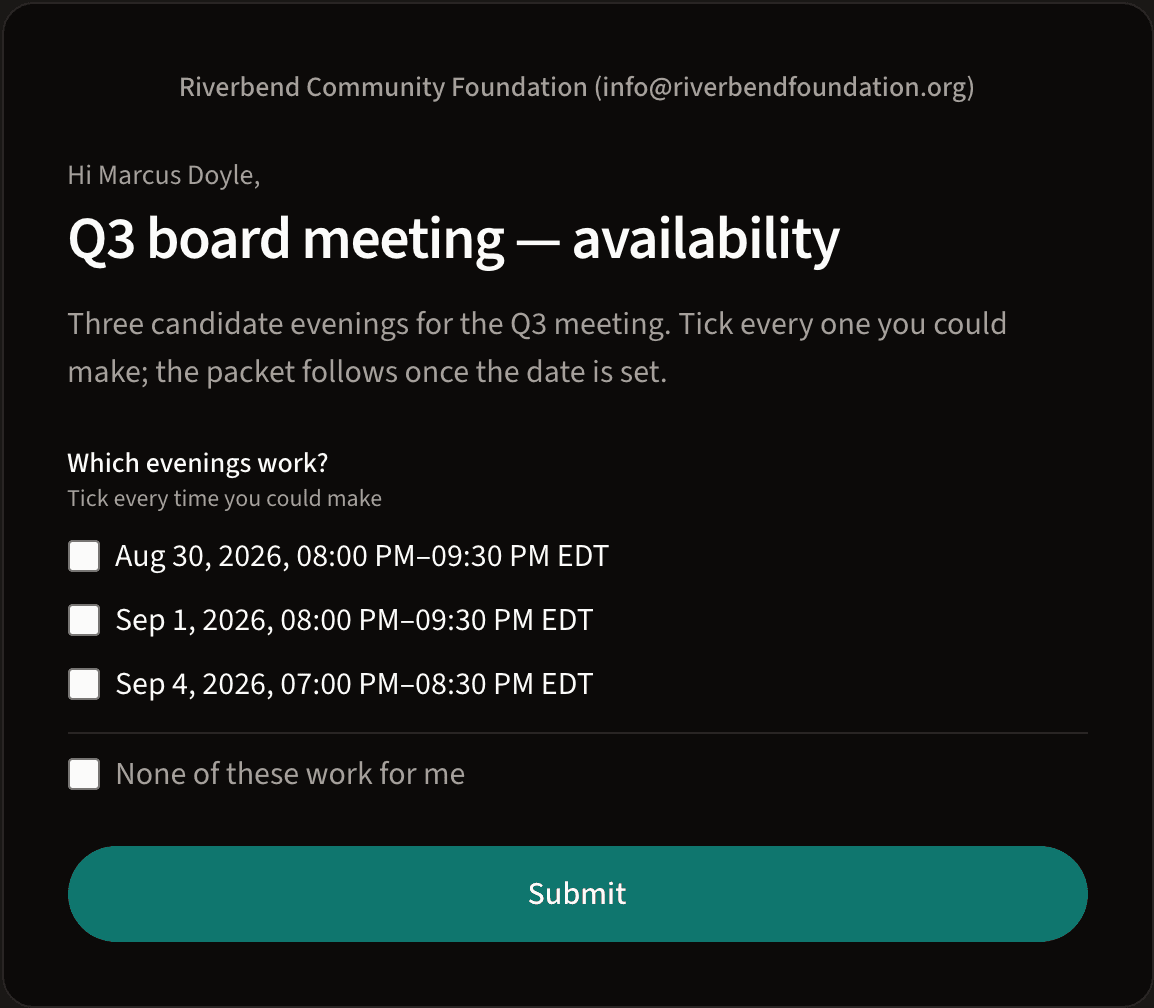
Write the questions once — a paragraph, a photo, a file, a date — and pick who gets asked.
A glimpse inside.
The dashboard
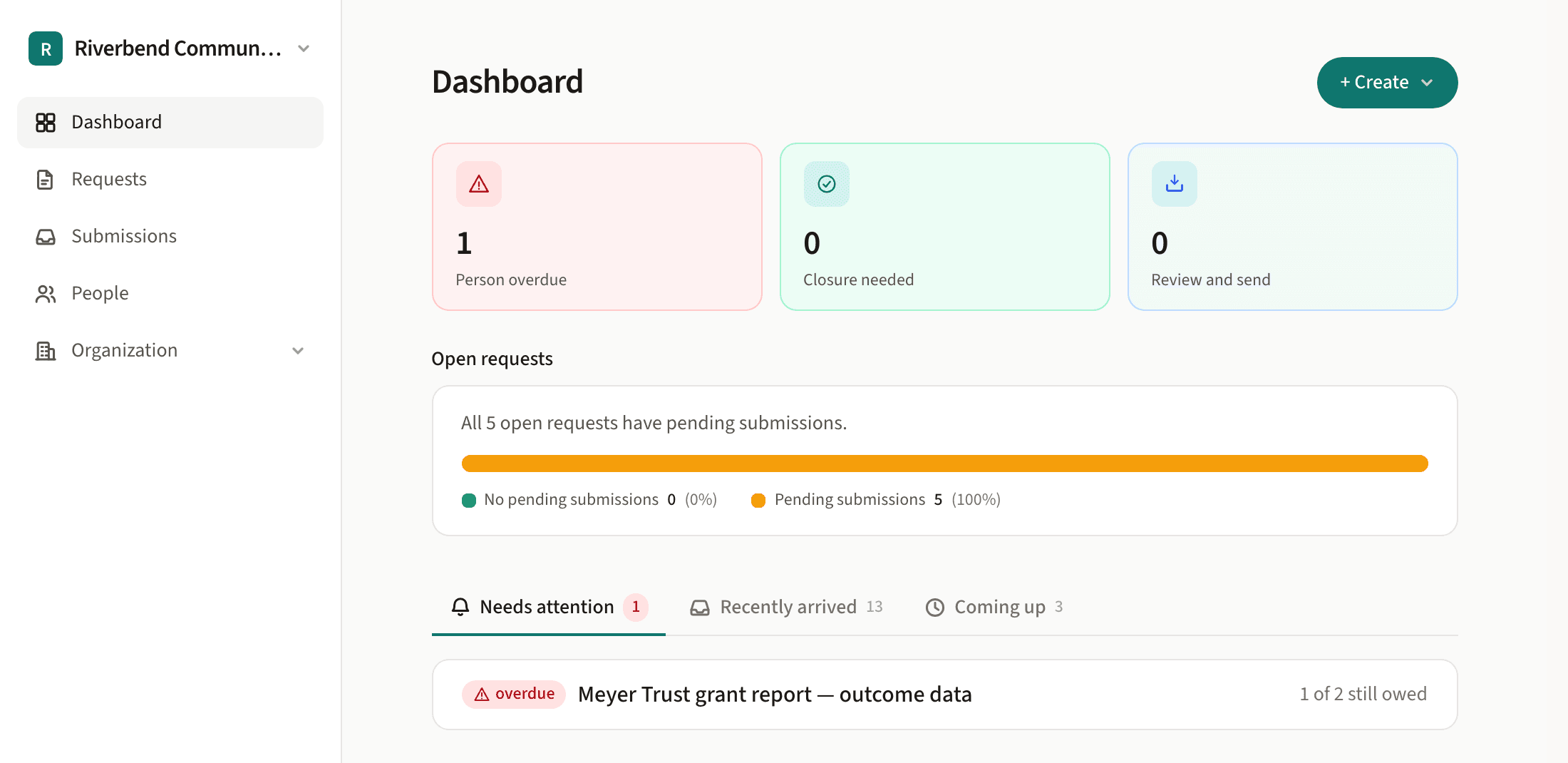
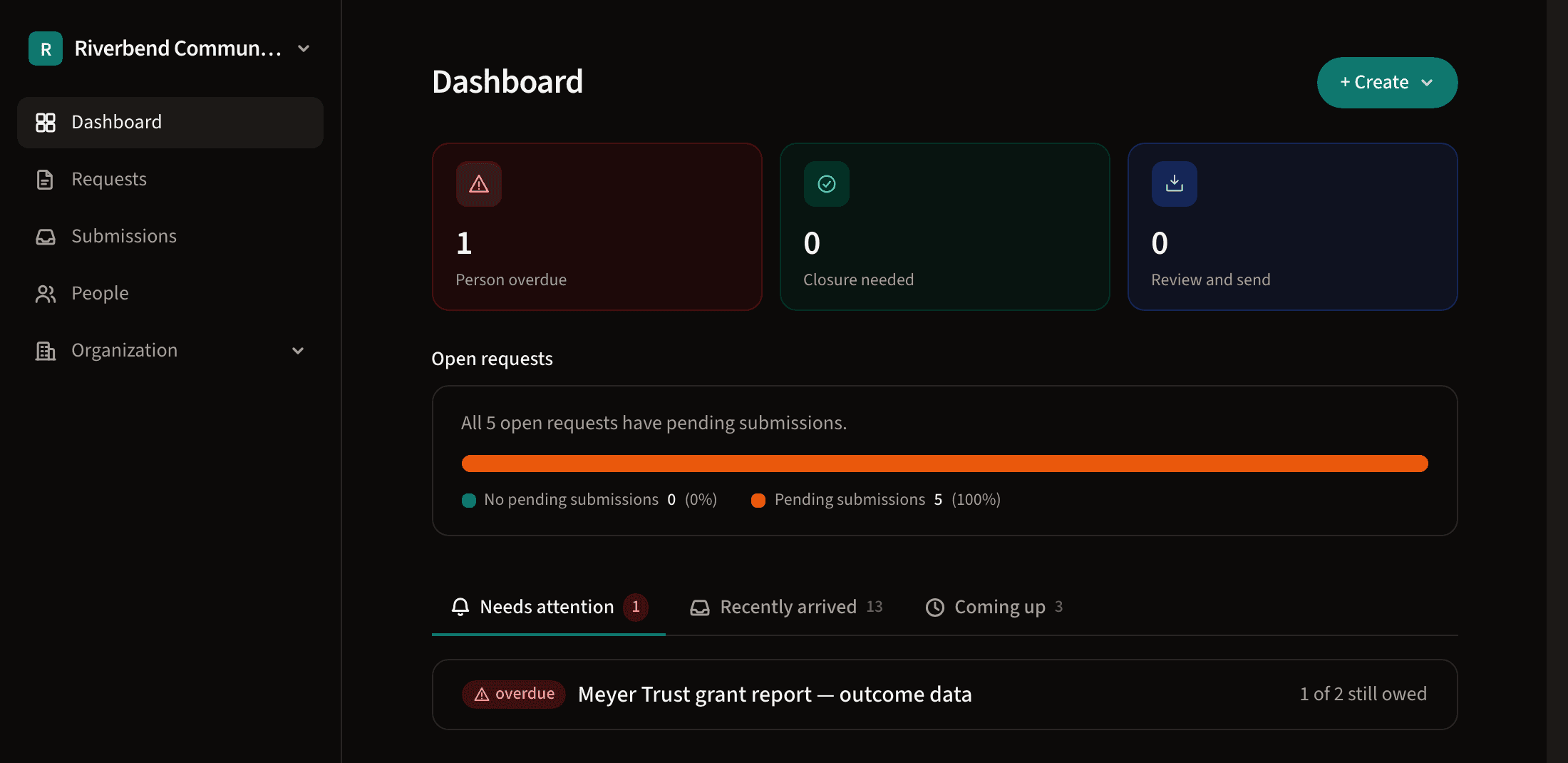
The snapshot of what needs doing.
Who is overdue, what is finished and waiting to be closed, what is built but not sent. Three counts, then the list behind whichever one you came for — not a wall of everything that has ever happened.
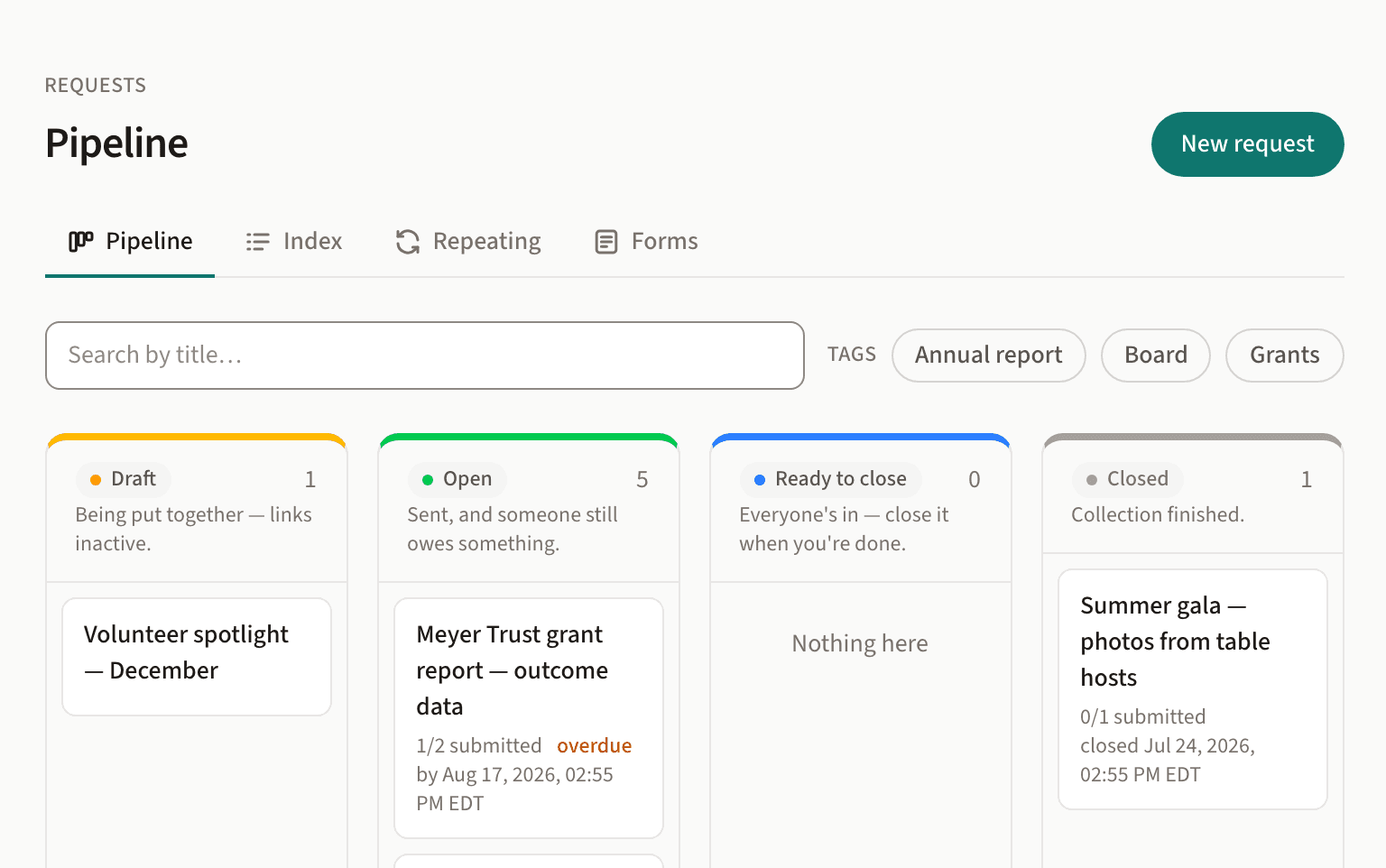
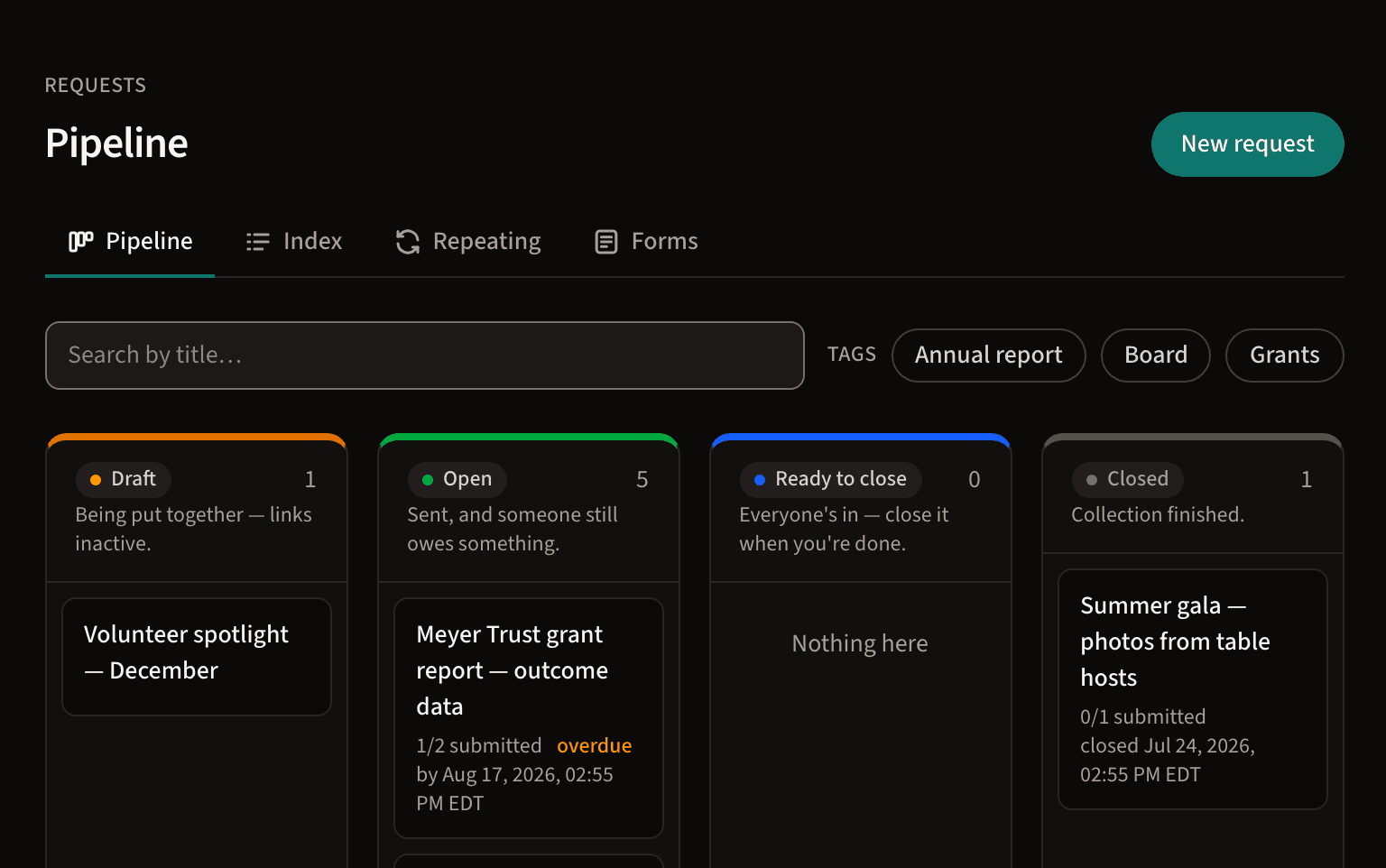
The pipeline
Every ask, and exactly how far it got.
Draft, open, ready to close, closed. Each request sits in the stage it is actually in — worked out from what has come back, never from a status somebody remembered to set — and you can drag one to send it or to close it.
Sign-up sheets
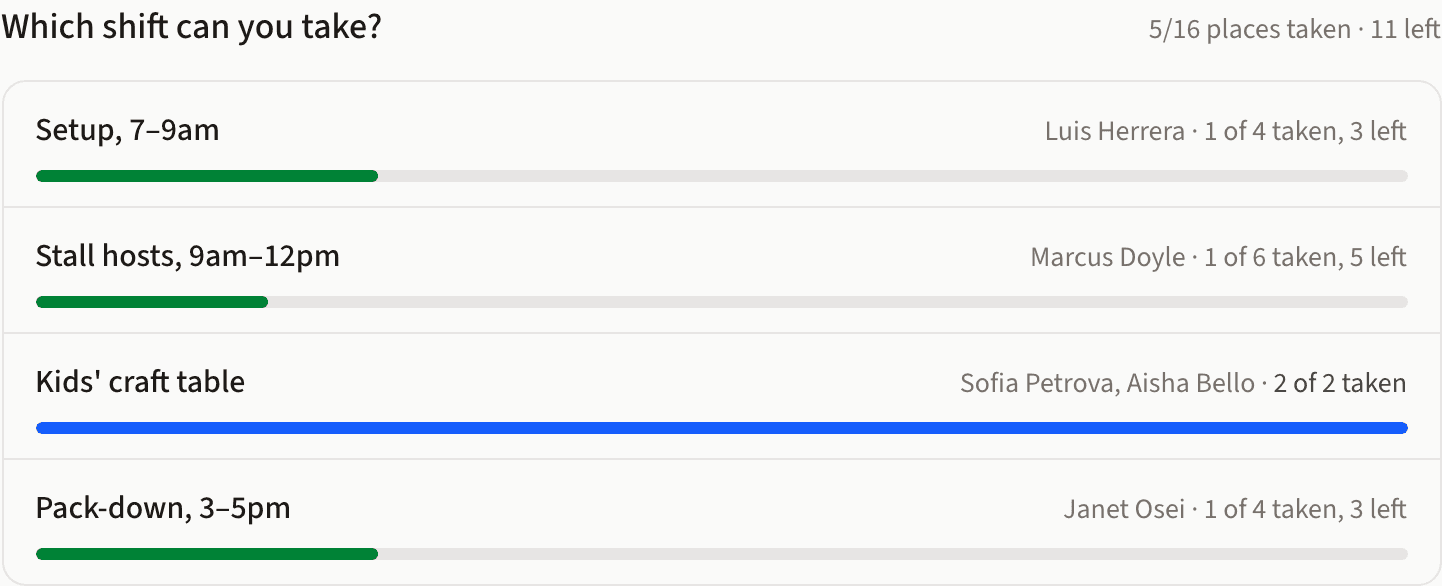
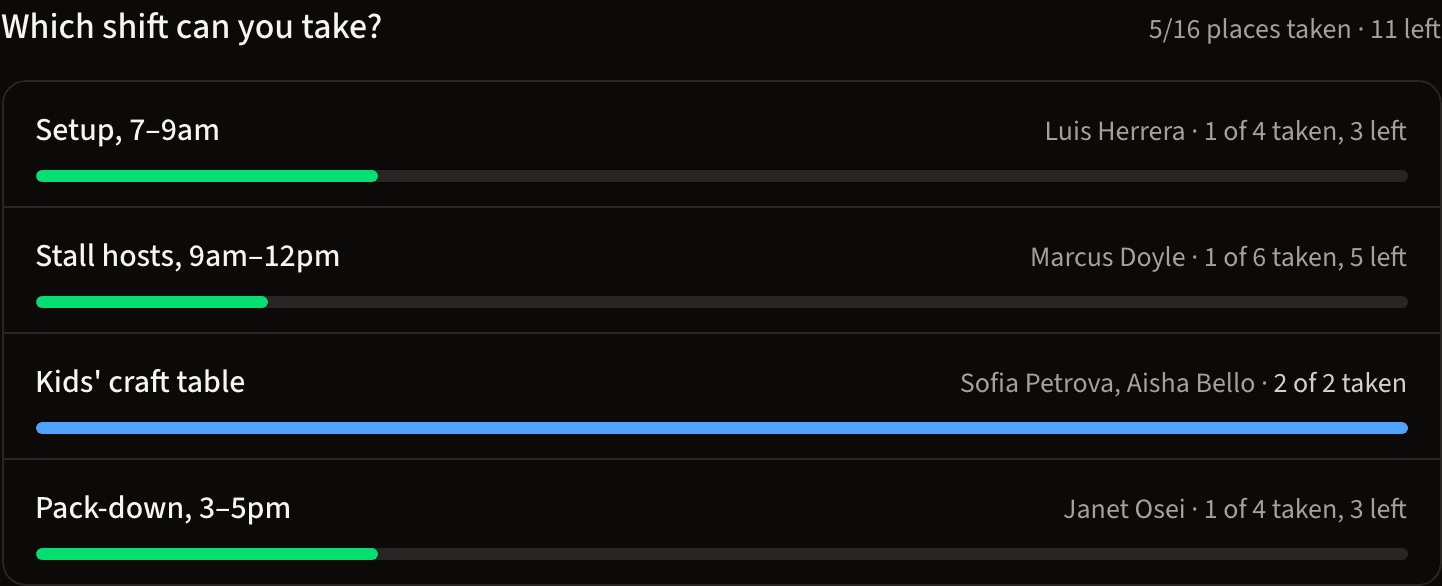
First come, first served.
Offer the shifts, the slots or the jobs, say how many of each there are, and let people take them. Everyone sees what is left as they choose, a full place closes itself, and you get the list of who is on what.
What they receive
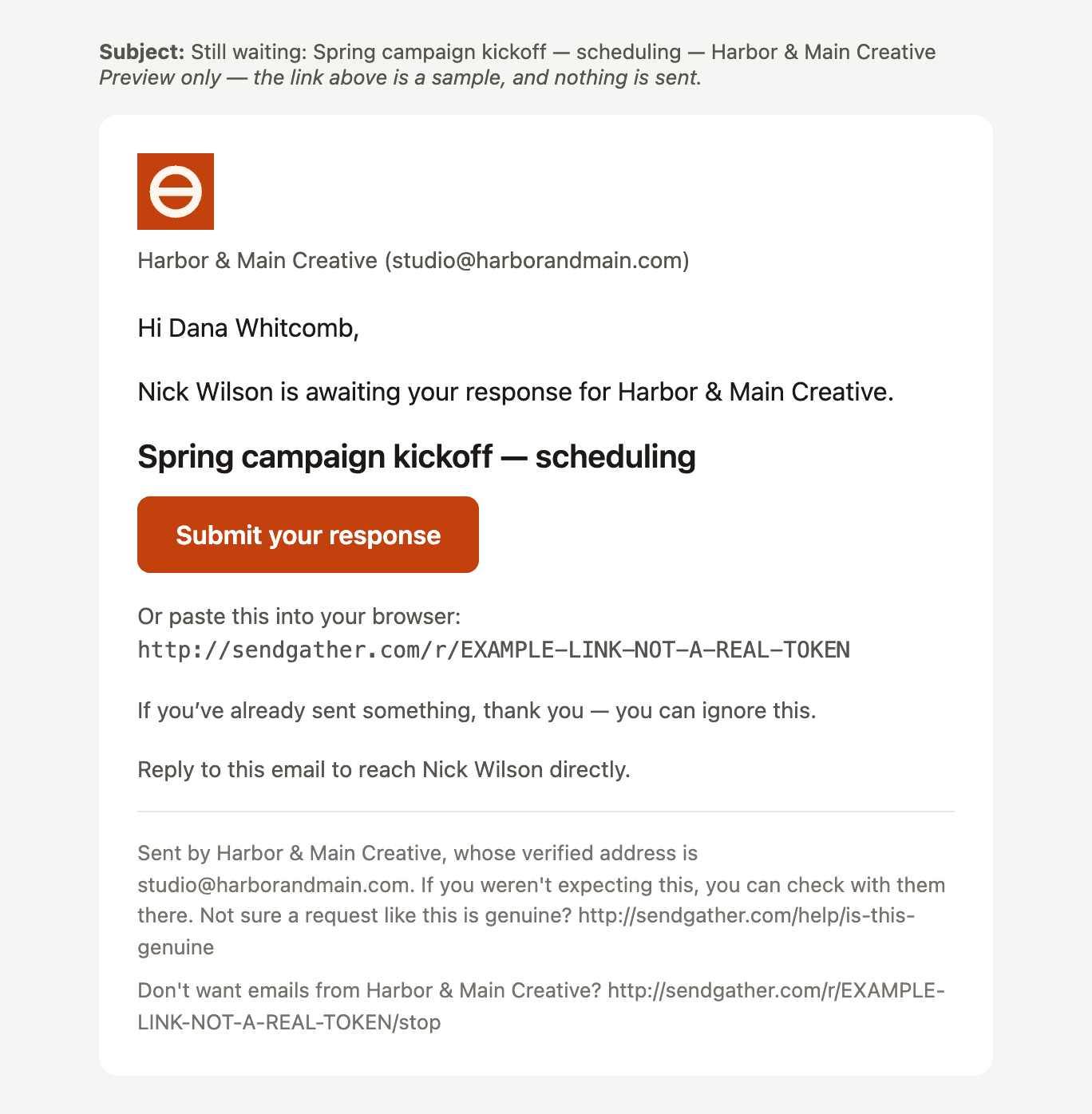
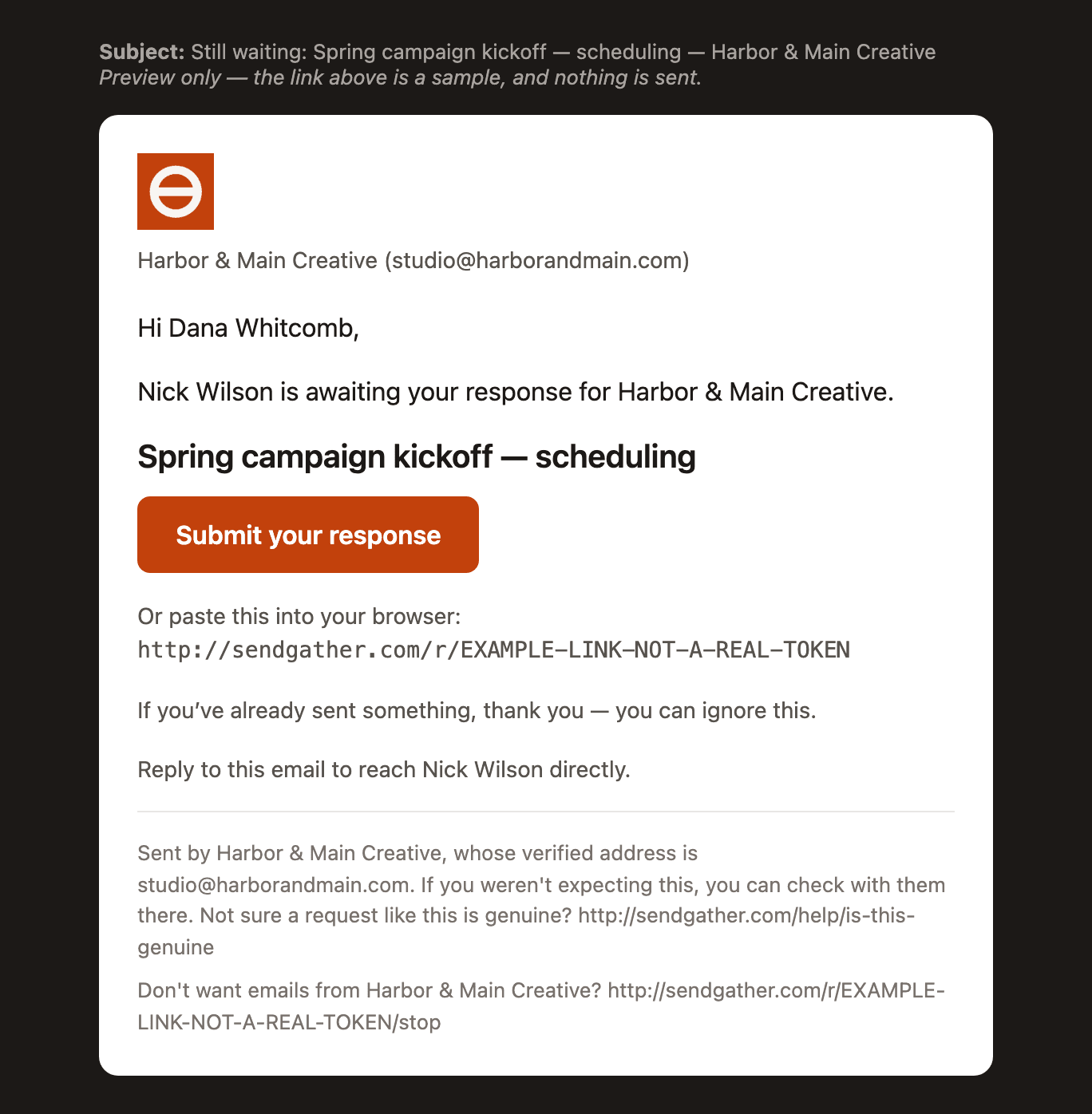
Your organization's email, not ours.
Your logo, your colour, your verified address, and the name of the person doing the asking. The only mention of us is the line telling a suspicious reader how to check that the message is genuine — which is there on purpose.
You need things from external stakeholders.
That is the whole problem, and it looks much the same whether they are clients, vendors, or volunteers. Pick the one that sounds like you.
The people holding what you need are clients and vendors. They don't work for you — there is no shared drive to point them at and no ticket you can assign them, only an email you end up sending three times.
- Onboarding documents from a new client — signed forms, logos, brand guidelines, the copy they promised
- Certificates of insurance, W-9s and licences from every vendor, gathered before the renewal date rather than after it
- Headshots, bios and sign-off for a launch — one short form, one per person, filed under their name
- The monthly numbers, photos or reports from each location, franchisee or subcontractor
Nobody you chase makes an account, sets a password or logs into a portal. They open their own link and answer.
Volunteers and constituents are doing you a favour. They will answer on a phone, in the evening, if it takes two minutes — and you will be asking most of them for the same thing again next quarter.
- Shifts and roles for an event — a sign-up sheet with a limited number of places, so people see what is still going
- Program updates, photos and stories for the newsletter, the website or the annual report
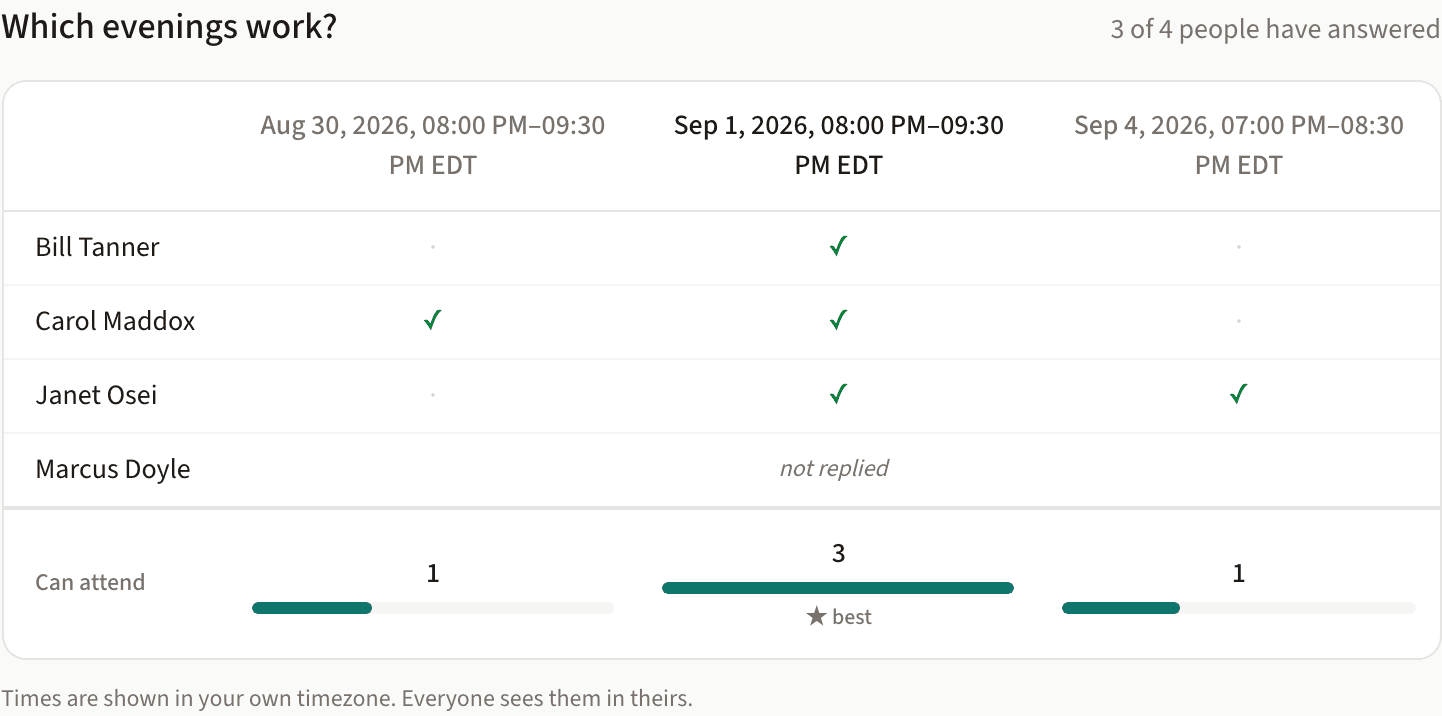
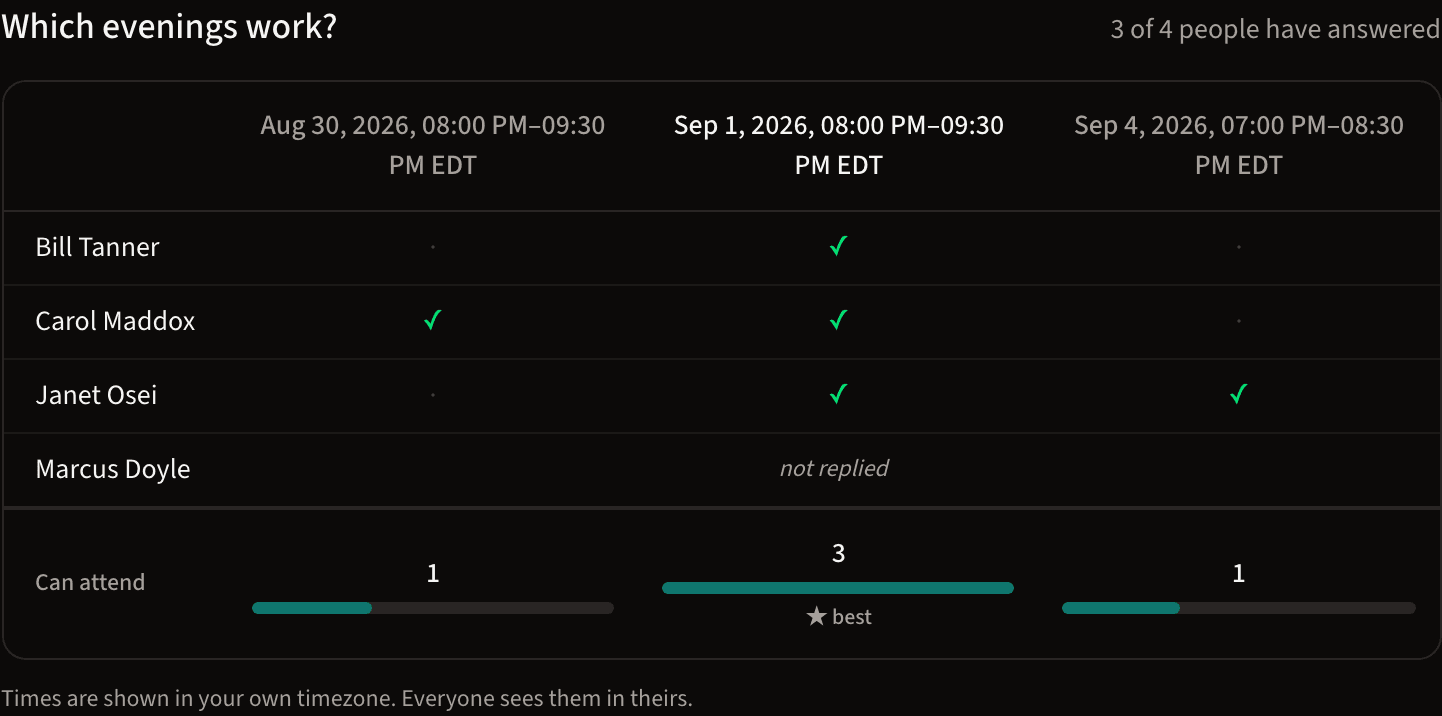
- Availability for a board or committee meeting, added up for you so you can see which evening wins
- Reporting from program leads on the same form every quarter, so a year of it comes out as one spreadsheet
The repeated ask is the one that pays for itself. Say it repeats when you build it and the next copy is drafted for you, asking whoever is in the group at the time.
If your organization is tax-exempt, tell us before you buy credits and we'll sort it out.
You will need an email address on your organization's own domain to create an organization — a personal Gmail or Outlook address won't do.
A form collects. It doesn't chase.
Google Forms and Typeform take a paragraph and a photo perfectly well. None of them addresses the ask to a named person, says who individually is still missing, or does anything about it.
It keeps asking, so you don't have to.
The chasing is the part that costs a volunteer their evening. It is also the part a computer is good at.
Reminders that send themselves
Set a request to chase every few days and it does — quietly, in your organization's name, and only to the people who haven't answered. Each person stops being chased the moment they reply.
Requests that come back around
For the things you ask for every month: say so when you build it, and a fresh draft is made for you on a schedule and sent over to look at. Every copy asks the same questions — so a year of answers comes out as one spreadsheet — and it can ask whoever is in a group at the time, rather than a list that goes stale.
Nothing sends until you send it — unless you decide otherwise.
Automatic sending is off until you turn it on, one schedule at a time. Turn it on and you get the draft a day early, with the choice to stop it.
It knows when it is finished
Tell a request to close itself the moment the last person answers, and it does — no last visit to tidy up. Tell it to send everyone a copy of their own answers as it closes, and nobody has to email you next month asking what they sent.
Each person gets their own answers back, never anybody else's, and anything you marked sensitive is named rather than repeated.
Ask for anything you would otherwise ask for by email.
7 kinds of question, arranged however you like, and a question can be set to appear only when an earlier answer makes it relevant.
Save the whole thing as a form and send it again next quarter. Every copy asks the same questions, so the series exports as one spreadsheet rather than four unrelated ones.
- A paragraph, with a word limit if you need one
- A short answer — a phone number, a URL, a date
- A pick from a list you write
- Times they are free, added up across everyone you asked
- A sign-up sheet — limited places, taken first come, and they see what is left
- A photo, resized on the way in
- A file, kept with the name they gave it
You're asking for other peoples' info.
Sometimes a photograph of somebody's child. Files are never public and never guessable — every one is permission-checked and served through a link that expires in a minute. Sign-in has no password to steal, two-factor is there when you want it, and every organization sees only its own data.
What we do, and what we don't claim →One credit asks one person.
Buy a handful when you need them. No subscription, no card kept on file, and they never expire. Your first 100 are free.
We'll email you a sign-in link — there's no password to choose.
Been asked to contribute something? Open the link you were sent — you don't need an account here. Not sure it's genuine?